16 Must-Follow Instagram Pages For Lidar Vacuum Mop Marketers
LiDAR Vacuum Mop Utilizing Light Detection and Ranging (lidar) technology This robot vacuums and mops. This makes it more efficient than previous technology and stops it from hitting objects while cleaning. This model creates the floor map and detects obstacles, even small ones like socks and charging cables. It also allows you to define virtual boundaries and no-go zones using the ECOVACS app for customized cleaning. LiDAR Technology LiDAR is a remote sensing active technology that makes use of lasers to measure objects on the ground. The laser is fired and reflected by objects like trees or buildings. The distance between objects can be determined by observing the time taken for the laser light to reflect and return to the sensor. LiDAR technology is employed in robot vacuum cleaners because it allows them to see more of the space than they could without it, thereby making it possible to better avoid obstacles and organize their cleaning routes in a smart way. The Neato XV11 is a good example of LiDAR technology being integrated into robot vacuums. In this model, a rotary laser is integrated into the lidar sensor in order to detect the floor and to identify objects that might block its route. The SLAM algorithm uses this information to produce more accurate maps and plan routes that take into account the obstacles. This results in a much more thorough and efficient clean. The Neato XV11 has anti-drop sensors as a bonus. They prevent it from falling off furniture or over the stairs. It also increases the suction power automatically when it is in a carpeted area. This lets it get the job done faster and reduces wear on your carpeting. Many industrial applications use LiDAR technology for creating 3D models and quality control reasons. LiDAR technology can be utilized to create digital elevation models that are useful for engineering projects and infrastructure maps. The data can be used to determine the security of a place by identifying dangers such as flood zones and landslides. Researchers and meteorologists also employ LiDAR sensors to determine a range of atmospheric components. These include temperature, cloud cover as well as wind speed and air density. This type of information is essential in forecasting weather conditions, and provides vital information to utilities and energy companies. SLAM Technology SLAM (simultaneous localization and mapping) is a technique used by robots to map their surroundings as well as track their location within it. While the idea behind SLAM has been the focus of decades of research in computational and mathematical sciences, it has recently become more feasible due to the growth of computer processing power and the reduction of costs for various components in a robot system. A typical instance of a SLAM-based system is the robotic vacuum cleaner. A SLAM vacuum cleaner makes a map of the space it is cleaning. This enables it to move more efficiently and avoid obstacles. It does this through sensors and algorithms that include visual (or “vSLAM”) scanning and the rangefinder. These sensors detect the surfaces of the objects in the room, for example a sofa or table, and use that information to create a virtual model of the room. After the vSLAM mapping is completed then a robot can map the course. It can figure out how to bypass objects like coffee tables or chairs and still be in a position to reach all the corners and other areas of a room. Utilizing a laser rangefinder the robot can also determine its distance from objects and other features in a room. Gyroscopes are another sensor used in some robot vacuums to help them avoid hitting objects and create a basic map of their surroundings. While they may not be as precise as systems utilizing LiDAR or SLAM they can still provide a navigation solution that is sufficient for a lot of robot vacuums. They are also incorporated into less expensive models. Look for a robot vacuum cleaner that has SLAM and sensors. For instance, the DEEBOT X1 OMNI from ECOVACS utilizes vSLAM and a YIKO voice assistant that allow you to operate it hands-free. It can refill its water and empty its dustbin. The OZMO Turbo pressurized mops has a maximum of 5,000Pa suction for a powerful clean. It is compatible with iOS and Android and also works with Alexa and Google Assistant. Gyroscopes Gyroscopes are the sensors that keep robots from crashing into objects, and can help them create an outline map of space. what is lidar robot vacuum Robot Vacuum Mops 're a great method for your robot cleaner to navigate around furniture or other obstacles. If you're looking for the most effective mapping technology for your next vacuum, or mop, you should look for one with LiDAR. LiDAR technology (light detection and moving) emits a laser beam into the surrounding space, and determines the amount of time it takes for the laser to travel to and return to the object. This information is used by the robot to create an imaginary 3D map of the area. It can also be used to identify objects and devise efficient cleaning routes. This technology is extremely beneficial and allows the robot to navigate around the most complicated spaces easily including rooms with multiple levels or staircases. It is also faster than mapping technologies built on cameras. Lidar can be used in dark environments and at night, as opposed to the mapping using cameras that requires light to operate. Many gyro navigation robots include features that allow you to schedule cleaning sessions and monitor the progress of your cleaning sessions through the app. This means that you can leave your home at the beginning of the day and be confident that it will be clean when you return. This feature is great for those with a busy schedule or who may be away from home often. 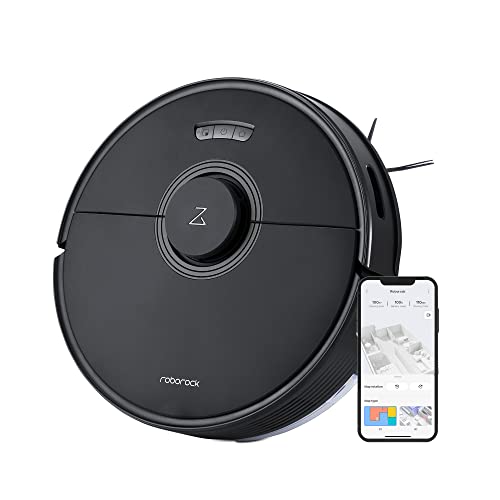 ECOVACS' DEEBOT line of mop and vacuum robots employ LiDAR technology to ensure an efficient cleaning. The DEEBOT X1 OMNI model is a follow-up to. This model offers a totally hands-free experience with its all-in-one OMNI station. It will automatically empty the dustbin, replenish water, and separate clean water from dirty mop heads. It is also able to dry the mop's head quickly with hot air, preparing it for the next cleaning session. The most recent model comes with OZMO Turbo 2.0 that rotates the mop 180 times per minute to offer premium scrubbing capabilities. It also has the ability to automatically switch to carpet auto-boost if it detects it's moving from hard flooring to carpet for more powerful cleaning. Sensors Like gyroscopes and lidar sensors, they assist robots in avoiding collisions with objects and form basic maps of the space. However they are usually a bit more complex than gyroscopes and are capable of providing more precise information about the environment. Lidar technology, which stands for Light Detection and Ranging, uses a rotating laser that emits a pulse of energy that bounces off surfaces and reflects back onto the sensor. The sensor determines the time taken by each reflection and converts the information into a precise measurement of distance. This information is utilized by the robot to construct an outline of the space, which helps it navigate and locate obstacles with greater efficiency. In contrast to traditional navigation systems which rely on visual information to identify and navigate around the environment robotic vacuums that use lidar are able of recognizing and navigating through all kinds of different objects. This reduces the risk of collisions and lets users enjoy a totally hands-free cleaning experience. However, just like other sensors on robotic vacuums, lidar may sometimes have issues, like interference from reflective surfaces or intricate layouts of rooms. In these situations, users can clear the area of any obstructions to improve the efficiency of the system. Making sure the sensor is clean and free from dust or debris can also help to improve the performance of lidar mapping. A robotic vacuum with lidar can also be improved by its ability to navigate through furniture and locate it. This is especially beneficial for larger rooms and can stop the robot from wasting time wandering around the room or getting stuck in corners. This is a huge benefit to busy homeowners and gives them the confidence that their home is cleaned fully without them having to oversee the process. ECOVACS offers premium robotic vacuums that have lidar navigation, such as the DEEBOT X1 OMI. This unit can separate clean and sewage water, fill and rapidly dry the mophead, and includes an integrated YIKO Voice Assistant for an unobtrusive experience. The new omnidirectional motor can rotate up to 180 times a minute and delivers strong suction up to 6,000Pa. This makes it perfect for large homes or commercial environments.